Run. Measure. Question.
A two-qubit experiment in operating a quantum workload. Every result on this page is simulated.
Decisions occur only after balanced XX, YY, and ZZ batches. The same seed reproduces this browser engine’s stream; Python uses its own recorded random generator.
READY TO SIMULATE
Prepare a Bell state, introduce declared noise, and test a score threshold with finite sampling uncertainty.
XX —
YY —
ZZ —
Measured bit strings use q1q0 order. Each bar is a simulated count; even parity contributes +1.
Interval progression.
The orange line marks the 0.90 score threshold. Bounds are deliberately unclipped; the half-width uses the full interval.
| Shots / basis | Score | Lower | Upper | Half-width | Decision |
|---|
Inspect the evidence.
Configuration, engine versions, per-batch seeds and counts, stopping history, validation findings, and SHA-256 integrity are recorded together. Hashes detect changes; they do not authenticate an untrusted author.
A run will create an inspectable record here.
Take the experiment apart.
Run the same measurement model and statistical contract with Python 3.12 and Qiskit Aer. The project includes a local SQLite runner, CLI, loopback HTTP API, locked dependencies, captured evidence, tests, and a separate Stim/PyMatching exercise. All exercises use simulators.
Download the code-only project ↓The ZIP contains code, fixtures, plots, and setup documentation. The book is available in this reader.
python3.12 -m venv .venv
source .venv/bin/activate
python -m pip install -r requirements.lock
python -m pip install -e . --no-deps
python -m pytest -q
quantum-ops run --scenario baseline
Decode, then compare.
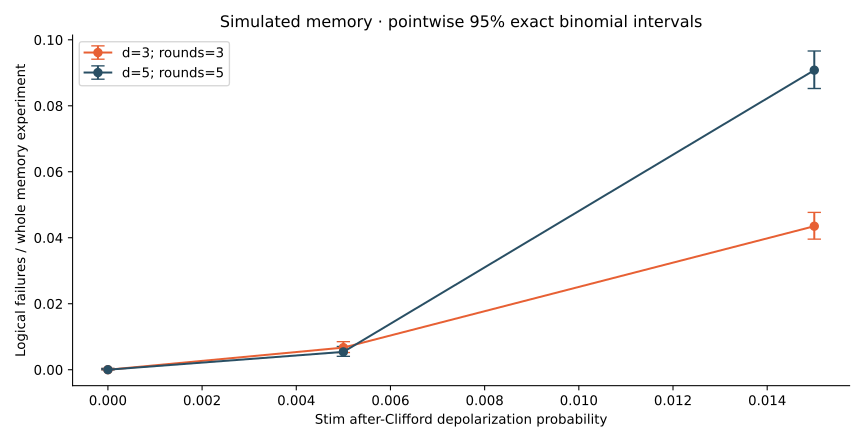
The QEC exercise compares PyMatching’s predicted logical-observable flips with Stim’s sampled observables. These are simulated memory experiments with restricted circuit noise. Host batch decoding times describe this computer, not a quantum controller’s real-time performance.